Everest Thangka logo

Handcrafted Himalayan thangkas, singing bowls, statues, and jewellery — sourced from master artisans of Nepal.

Quick Links

  • Home
  • All Products
  • Blogs
  • About Us

Collections

  • Thangka Paintings
  • Singing Bowls
  • Sacred Statues
  • Jewellery

Support

  • Your Cart
  • Your Profile
  • FAQ
  • Privacy Policy
Top Thangkas
Top Singing Bowls
Privacy PolicyTerms of service

© 2025 Everest Thangka. All Rights Reserved Designed and developed by Protozoa Host, powered by Nomor LLC.

Everest Thangka logo
  • Home
  • All Products
  • Thangkas
  • Singing Bowls
  • Statues
  • Jewellery
  • Blog
  • About

Blog Article

what is thangka

What Is Thangka? Symbol, Art and History

Thangka is a sacred art form popular in Buddhist communities, with its name coming from "than" (plain surface) and "ka" (painting), art created on plain cotton cloth. Though often spelled or pronounced differently as "thanga," "thagha," or "thanaka," all point to the same ancient tradition rooted in northern Nepal and Tibet. It's far from freestyle: painters strictly follow rules, colours, and philosophy drawn from scripture, where each color represents a specific god, energy, or teaching. This makes authentic thangka a disciplined system rather than personal artistic expression, valued by families for daily devotion and special rituals. The art comes in several distinct types, such as Painted Thangka (Tsem Thanka), each carrying its own purpose and story.

Published June 22, 2026

Overview

Thangka is a sacred art form popular in Buddhist communities, with its name coming from "than" (plain surface) and "ka" (painting), art created on plain cotton cloth.

Thangka is an art form mostly popular among the Buddhist community. The actual meaning of thanka is a term “than” means plain surface and “Ka” means painting. Those arts which are painted on plain cotton cloth are thanka. It is mostly popular in countries like Nepal, Vietnam, Malaysia, the US, Australia and Canada.

When a random person hears the word thanka for the first time, he or she gets confused about how to pronounce it, either thanga, thagha or thanka. These three terms all represent theancient artthat evolved from the northern Nepal and Tibetan belt.

History of Thanka Art

The history ofthankaart spread during the period when Buddhism was spreading all over the world. According to Byju's, thanka painting started around the 11th century in Tibet. Tibet is the birthplace of thanka painting, which is now popular worldwide in the 21st century. As Buddhist teachings reached Nepal, Tibet, Bhutan, and surrounding areas, artists began expressing those teachings through painted images.

Monks, teachers, and master painters used it as a visual teaching tool. It helped students easily grasp complex spiritual ideas. Over time, thanka art evolved into a highly refined tradition that has its own rules, proportions, and standards. Senior artists shared their knowledge with younger generations, teaching them the correct measurements for figures, lotus seats, hand gestures, halos, thrones, clouds, and mandalas.

They also taught which colours correspond to which god, energy, or teaching. Thanka painters have to strictly follow the rules from the book and the philosophy. For this reason, authentic thangka painting follows a system, not a personal style. In many places, families still keep old thanka paintings for daily devotion and remembrance. Some display them every day. Others bring them out only during special rituals and ceremonies.

Types of Thanka Art

Thanka comes in several distinct varieties. Each type carries its own purpose, technique, colour character, and visual identity. Every style tells a different kind of story.

Painted Thangka (Tsem Thanka)

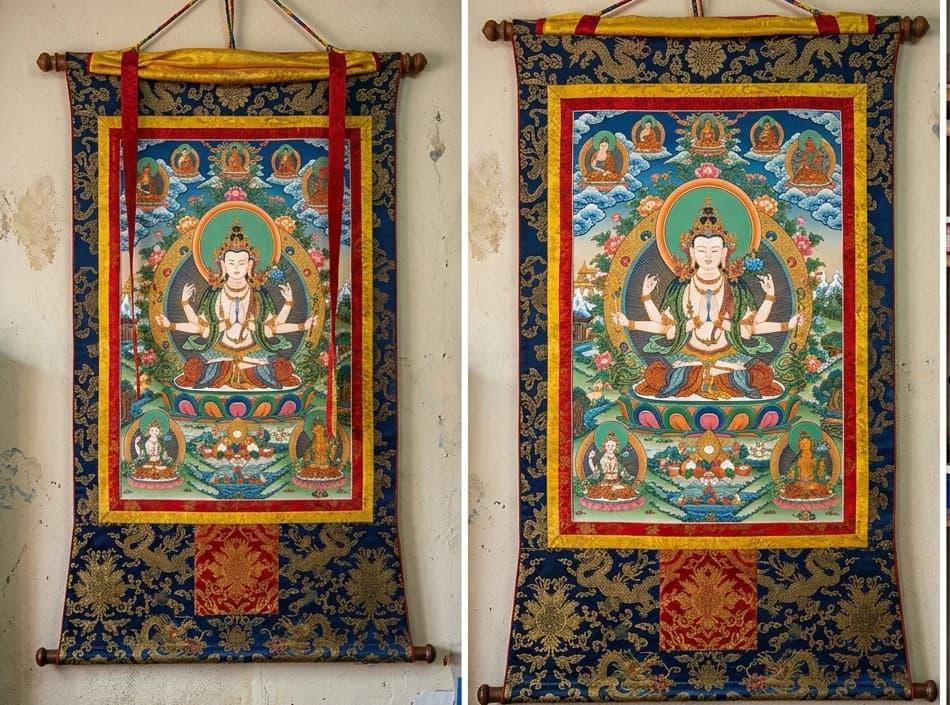
This is the most common thanka arts, Artists paint outline figures, landscapes, clouds, temples, and symbols by hand on prepared cotton or silk fabric. A painted thanka often dedicated to Buddha, Tara, Avalokiteshvara, Padmasambhava, orMandala". The colours for painting come from natural stone pigments ground from mountain rocks, mixed with glue water, and applied in careful sequence from background washes through to fine detail and gold finishing..

Applique Thangka (Go-Tang)

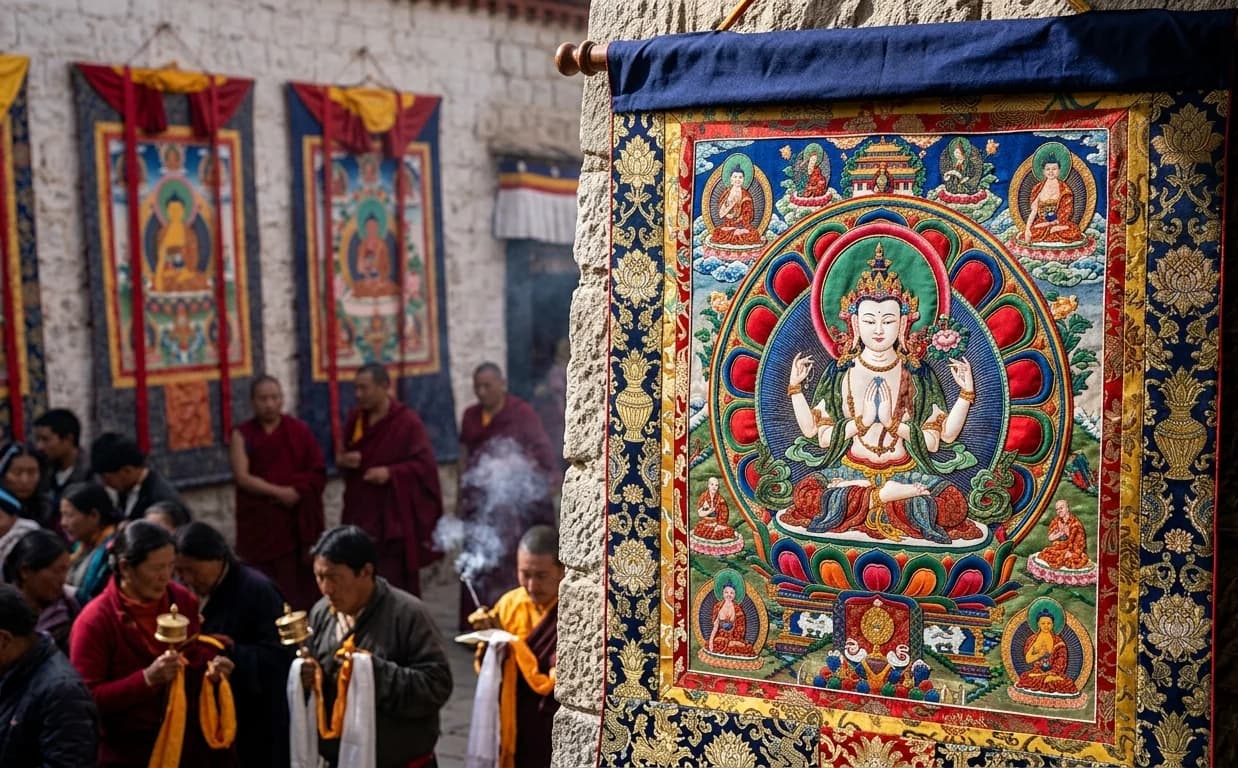
Artists construct applique thangkas from cut pieces of fabric. Artist sew and stitch layers of silk, brocade, and embroidery together to form sacred figures and symbols. Communities frequently display this style during large thangka festivals and ceremonial gatherings. The physical texture and layered depth of an applique thangka gives it a visual power that differs entirely from a painted work.

Black Thanka (Nagthang)

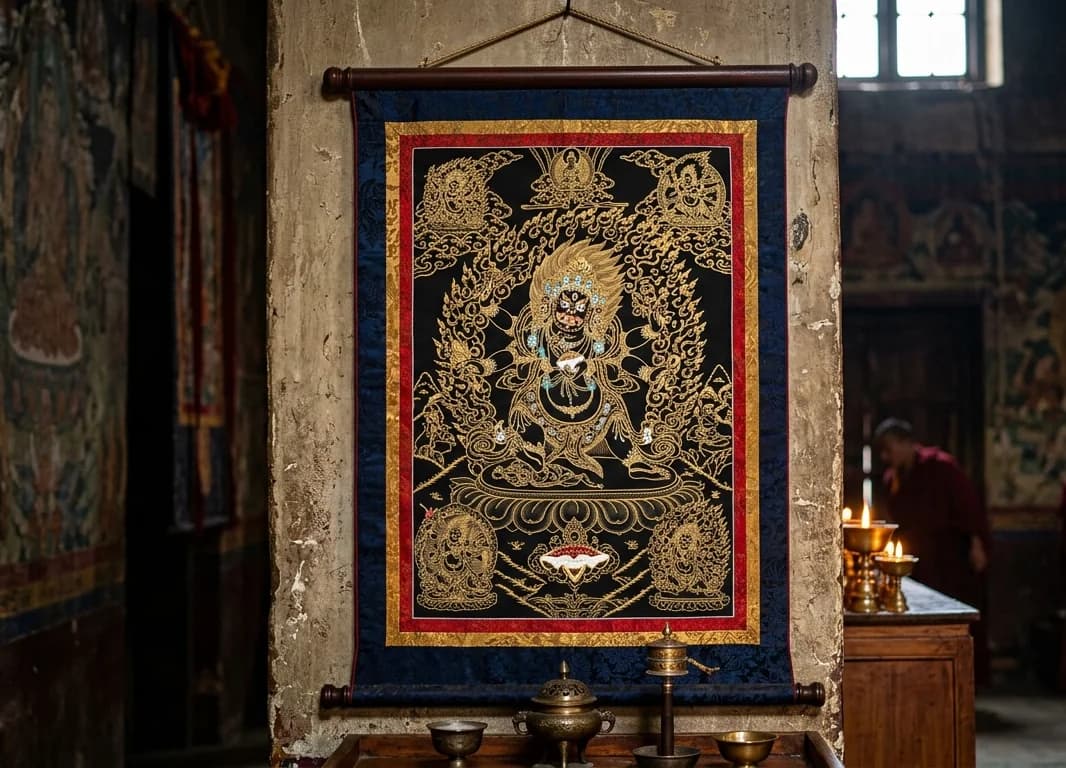
This style uses a dark or black background with fine gold lines or light colour accents painted over it. The effect is bold, serious, and commanding. It is the common form that artists choose to depict wrathful protectors or those associated with strong rituals. The contrast between the dark background and the bright gold highlights the intensity of the image.

Gold Thangka (Serthang)

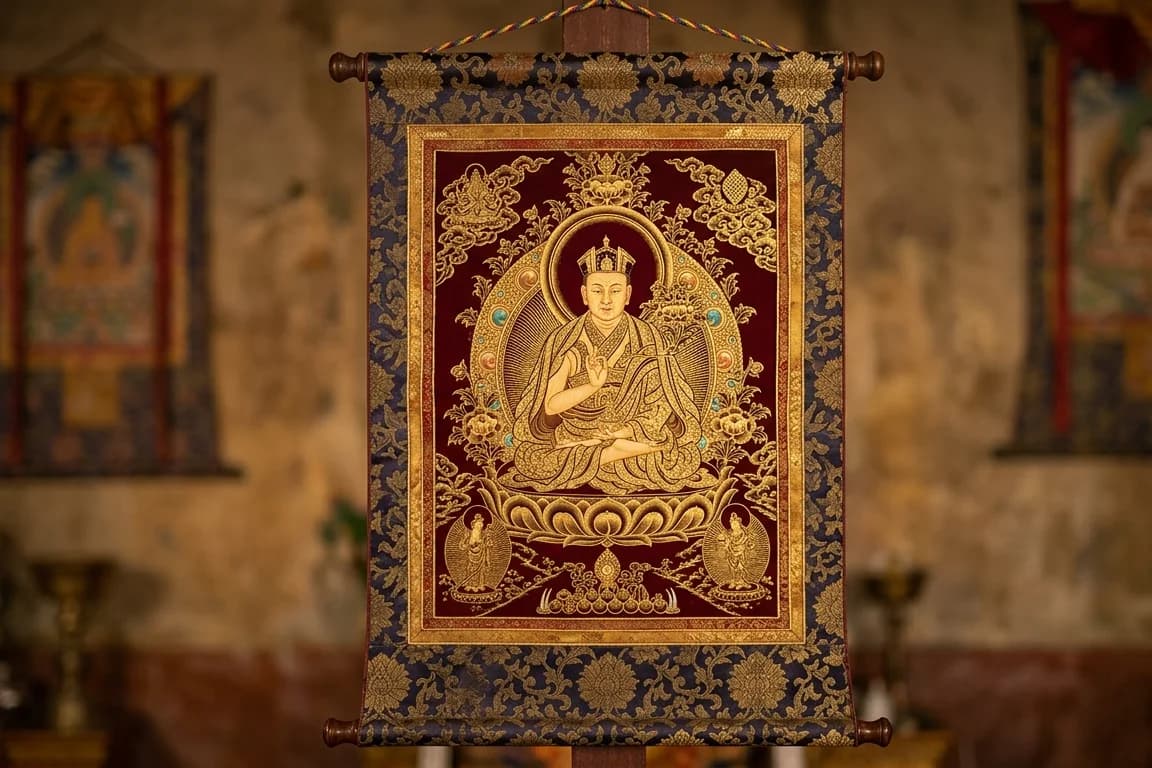
It use a red, dark, or deep-coloured background and paint the figures primarily in gold. The result looks rich, sacred, and full of inner light. Many collectors and spiritual practitioners admire this style for its beauty and for the sense of illuminated presence it brings to the figure depicted. Teachers often commission gold thangkas for the highest level spiritual teachings.

Embroidered Thangka

Instead of paint, artisans stitch embroidered thangkas entirely by hand using fine thread on silk. This style demands extraordinary patience and precision. It demonstrates the full depth of craftsmanship that authentic thangka art requires across all its forms. The finished work carries a texture and warmth that painted thangkas cannot replicate.

The Spiritual Side of Thanka

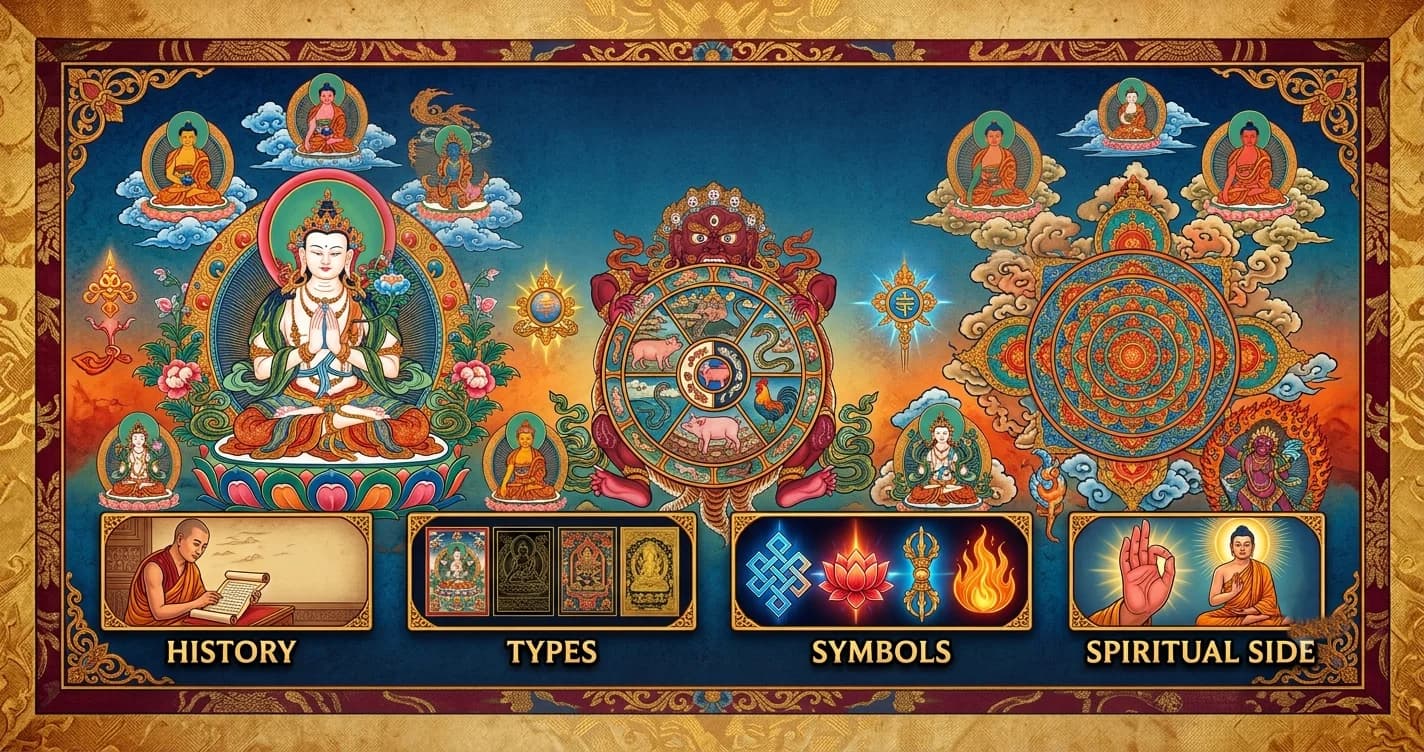
People use a thanka with purpose, religious people use it to focus, to offer devotion and to meditate. A monk sits in front of a thangka and uses the image to deepen concentration. A family keeps one at home as a constant reminder of peace and compassion. A teacher uses one to explain spiritual levels and values to students.

  • Thanka for meditation and prayer
  • Thanka has deep religious meaning.
  • Thanka teaches values like peace, compassion, and wisdom.
  • Thanka to bring a calm and positive feeling into their space.
  • Important part of Buddhist devotion and culture.

Many artists approach the work of painting itself as a spiritual discipline. Before an artist paints, they have to be in meditation because the artist has to concentrate the mind. For every hour of painting, the painter takes 10 to 15 minutes to meditate, because it is very stressful. This regular meditation keeps the artist's mind stable and clear throughout the process. A thangka painted with a distracted or agitated mind does not carry the same quality as one produced in a state of calm concentration. Many traditional teachers regard the mental state of the artist as just as important as technical skill.

Symbols of Thanka

Every drop of ink in thanka has its own meaning. Even a single dot is not accidental in thanka. Every small sign, image, line, architecture, and outline has its own meaning in thanka, so every thanka costs more and has more symbolic and spiritual value than other arts.

  • The endless knot shows that everything in life is connected.
  • Flames represent change and the burning away of ignorance.
  • A raised hand can mean protection, while a lowered hand can mean blessing.
  • Blue stands for wisdom, and white for peace.
  • Red for compassion, and gold for enlightenment.
  • The pig represents ignorance
  • The snake represents anger.
  • The rooster represents greed.

One of the most popular thanka subjects is theWheel of Life. In the center of the Wheel of Life, three animals are depicted: the pig, snake and the rooster. The entire Wheel of Life is held by the God of Death himself, Yama, while the Buddha stands outside the Wheel and points to freedom, peace, and nirvana. This is what makes authenticthankaart so special.

Conclusion

Thanka, thanga, or thangha is not simply apainting. It is sacred art, cultural memory, symbolic teaching, and spiritual practice in one form. Its history reflects the deep roots of the Buddhist tradition of the Himalayas. Its symbols carry layered meaning that rewards careful study. Its colours speak a precise visual language developed over centuries. Its spiritual side gives it a life that goes far beyond decoration.

For more info about thangka

Contact Us Now

Frequently Asked Questions

Editorial Team

Janak Pokharel