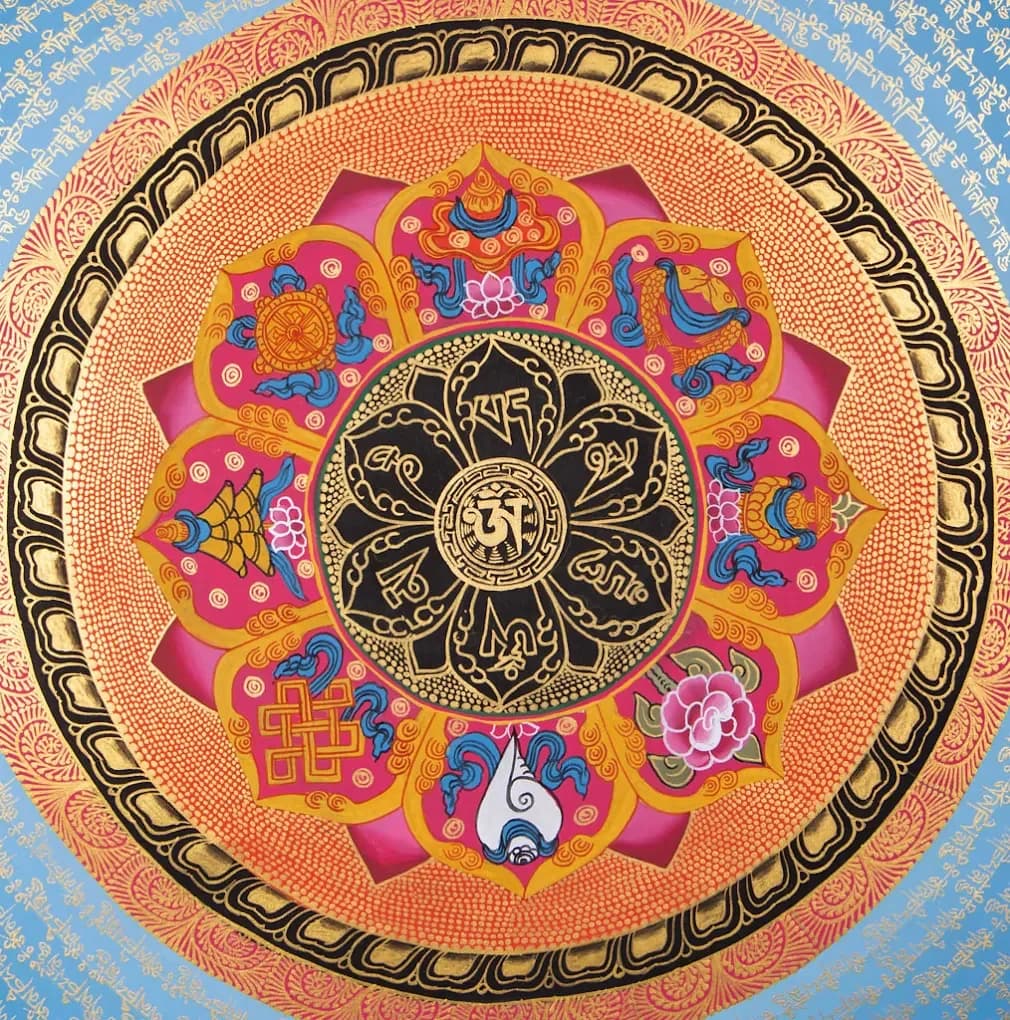
Thanka comes in several distinct varieties. Each type carries its own purpose, technique, colour character, and visual identity. Every style tells a different kind of story.
Painted Thangka (Tsem Thanka)
This is the most common thanka arts, Artists paint outline figures, landscapes, clouds, temples, and symbols by hand on prepared cotton or silk fabric. A painted thanka often dedicated to Buddha, Tara, Avalokiteshvara, Padmasambhava, or amandala. The colours for painting come from natural stone pigments ground from mountain rocks, mixed with glue water, and applied in careful sequence from background washes through to fine detail and gold finishing..
Applique Thangka (Go-Tang)
Artists construct applique thangkas from cut pieces of fabric. Artist sew and stitch layers of silk, brocade, and embroidery together to form sacred figures and symbols. Communities frequently display this style during large thangka festivals and ceremonial gatherings. The physical texture and layered depth of an applique thangka gives it a visual power that differs entirely from a painted work.
Black Thanka (Nagthang)
This style uses a dark or black background with fine gold lines or light colour accents painted over it. The effect is bold, serious, and commanding. It is the common form that artists choose to depict wrathful protectors or those associated with strong rituals. The contrast between the dark background and the bright gold highlights the intensity of the image.
Gold Thangka (Serthang)
It use a red, dark, or deep-coloured background and paint the figures primarily in gold. The result looks rich, sacred, and full of inner light. Many collectors and spiritual practitioners admire this style for its beauty and for the sense of illuminated presence it brings to the figure depicted. Teachers often commission gold thangkas for the highest level spiritual teachings.
Embroidered Thangka
Instead of paint, artisans stitch embroidered thangkas entirely by hand using fine thread on silk. This style demands extraordinary patience and precision. It demonstrates the full depth of craftsmanship that authentic thangka art requires across all its forms. The finished work carries a texture and warmth that painted thangkas cannot replicate.